
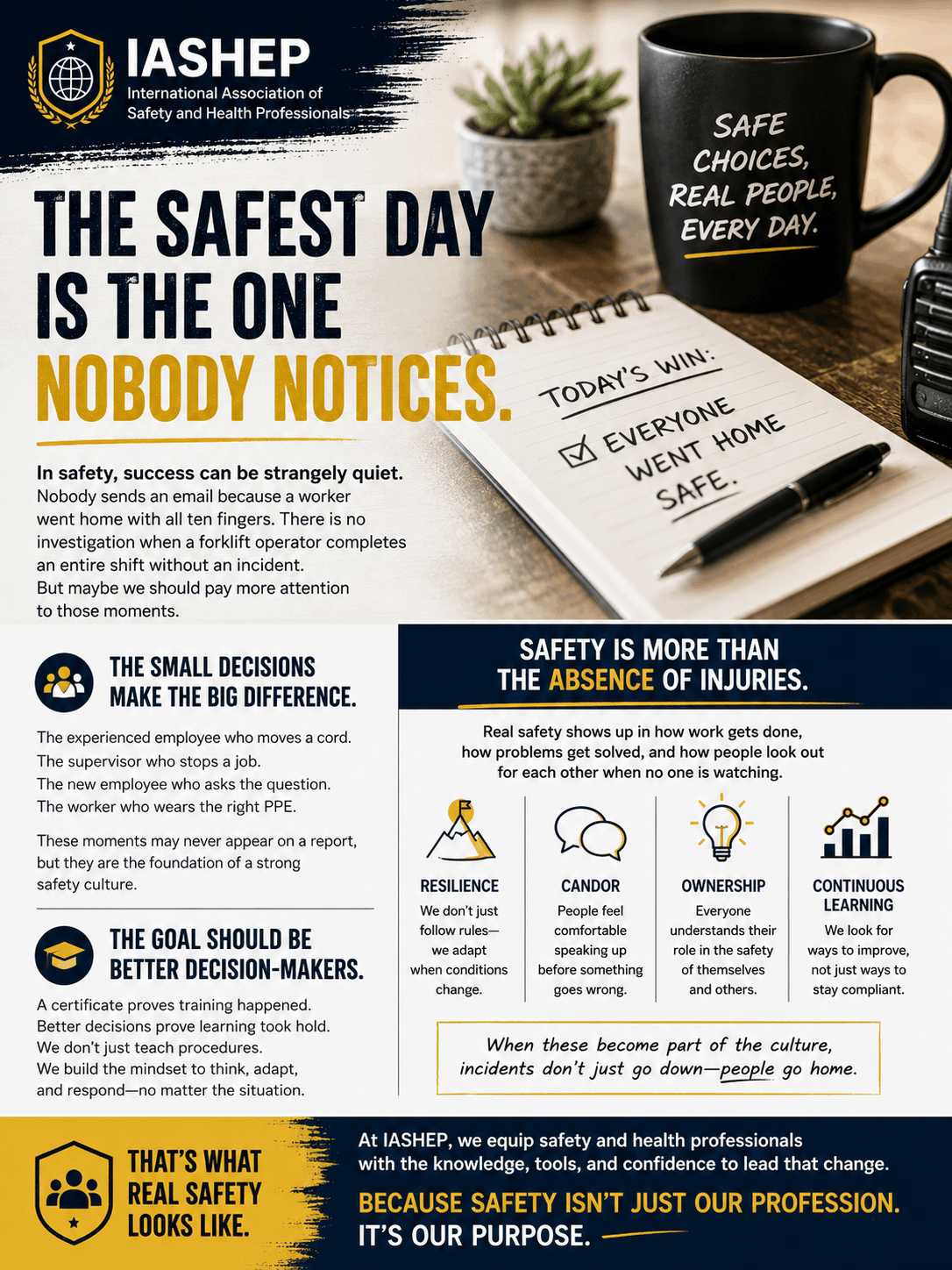
The Safest Day Is the One Nobody Notices
Aug 29, 2026

Amputation Hazards on Machinery Are on the Rise (2017)
Employing over 1.1 million workers in the United States, the plastics industry represents a substantial portion of the American workforce. Various safety and health concerns exist throughout the plastics industry, ranging from raw material manufacturing to plastics processing.
Already in 2017, if you look at the OSHA website, you will find that companies are still being cited for having unsafe machines, and employees’ fingers and other body parts are being amputated. This situation highlights a serious and ongoing safety issue.
Sources of Amputations in the Workplace
Amputations are among the most serious and debilitating workplace injuries. They are widespread and involve a variety of activities and equipment.
Amputations occur most often when workers operate unguarded or inadequately safeguarded machinery, including:
■ Thermoforming machines
■ Injection molding machines
■ Mechanical power presses
■ Power press brakes
■ Powered and non-powered conveyors
■ Band saws, drill presses, and milling machines
■ Shears, grinders, and slitters
These injuries also occur during materials handling activities and when using forklifts, doors, trash compactors, and powered or non-powered hand tools.
High-Risk Activities Beyond Normal Machine Operation
In addition to normal operation, the following activities involving stationary machines expose workers to amputation hazards:
■ Setting up
■ Threading
■ Preparing
■ Adjusting
■ Cleaning
■ Lubricating
■ Maintaining machines
■ Clearing jams
Mechanical Components That Present Amputation Hazards
The following mechanical components commonly present amputation risks:
Point of Operation
The area of a machine where it performs work on material.
Power-Transmission Apparatuses
Flywheels, pulleys, belts, chains, couplings, spindles, cams, gears, connecting rods, and other components that transmit energy.
Other Moving Parts
Components that move during operation, such as reciprocating, rotating, and transverse moving parts, as well as auxiliary machine parts.
Hazardous Mechanical Motion
All mechanical motion is potentially hazardous. Particular risks include in-running nip points (pinch points), which occur when two parts move together and at least one moves in a rotary or circular motion. Common examples include gears, rollers, and belt drives.
Employer Responsibilities in Preventing Amputations
Employers should recognize, identify, manage, and control amputation hazards commonly found in the workplace. These hazards may be caused by:
■ Mechanical components of machinery
■ Mechanical motion occurring in or near these components
■ Activities workers perform during machine operation
Work practices, employee training, and administrative controls play an important role in preventing and controlling amputation hazards.
Machine Safeguarding as the Primary Control Measure
Machine safeguarding is the most effective way to control amputations caused by stationary machinery.
Guards
Guards provide physical barriers that prevent access to hazardous areas. They should:
■ Be secure and strong
■ Not be bypassed, removed, or tampered with
■ Not obstruct the operator’s view
■ Not interfere with normal work
Devices
Devices help prevent contact with points of operation and may replace or supplement guards. They can:
■ Interrupt the machine cycle when hands are at the point of operation
■ Prevent operators from reaching into hazardous areas
■ Withdraw hands when the machine cycles
Devices must allow safe lubrication and maintenance, be tamper-resistant, durable, and not create additional hazards.
Safeguarding Responsibilities and Equipment Selection
Employers are responsible for safeguarding machines and should consider this need when purchasing machinery. New machines are usually available with manufacturer-installed safeguards, while used equipment may not be.
Safeguards can be:
■ Purchased from original manufacturers
■ Obtained from aftermarket manufacturers
■ Built and installed in-house
Safeguarding equipment should be designed and installed by technically qualified professionals. Ideally, the original equipment manufacturer should review safeguard designs.
Design Considerations for Effective Safeguards
Safeguards must be compatible with machine operation and designed for safe operator use. Factors influencing safeguard selection include:
■ Type of operation
■ Size and shape of material
■ Feeding method
■ Physical layout of the work area
■ Production requirements
Safeguards should be operator-friendly, as interference with machine operation may cause workers to override them.
ANSI B11.19 Performance Criteria for Safeguarding
The ANSI B11.19 national consensus standard provides guidance on the design, construction, installation, operation, and maintenance of safeguarding used to protect employees from machine hazards.
Industry Events and Observations
The author plans to speak on “How to Develop an Effective Machine Guarding Program” at the AWFS Show in Las Vegas, Nevada, in July.
During previous attendance, many new machines on display lacked essential guards and safety devices, even when similar machines nearby were properly safeguarded.
Offer of Assistance to Vendors
Vendors showcasing machinery at industry events are encouraged to have their equipment reviewed prior to display. Common issues observed include:
■ Missing point-of-operation guards
■ Exposed belts and pulleys
■ Improper color coding
■ Lack of emergency stops
■ Absence of power outage protection
Need Help with Machine Safeguarding?
Podojil & Associates, Inc. is recognized as an expert in machine safeguarding. Assistance and consultation are available at:
Website: www.podojilconsulting.com
Phone: 612-801-1032
Closing Remarks
Thank you for reading the magazine. It has been a pleasure contributing for the past ten years. Best wishes for a safe and happy New Year.
John F. (Jack) Podojil
Comments (0)
No comments yet. Be the first to comment!
Leave a Comment