
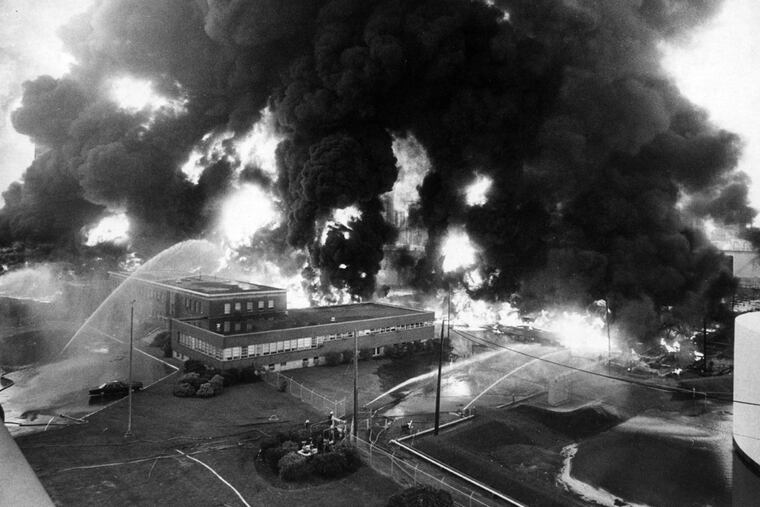
August 17, 1975: When the People Responding to the...
Aug 18, 2026
Why Everyday Safety Decisions Matter More Than Most People Realize
Success in Safety Is Often Quiet
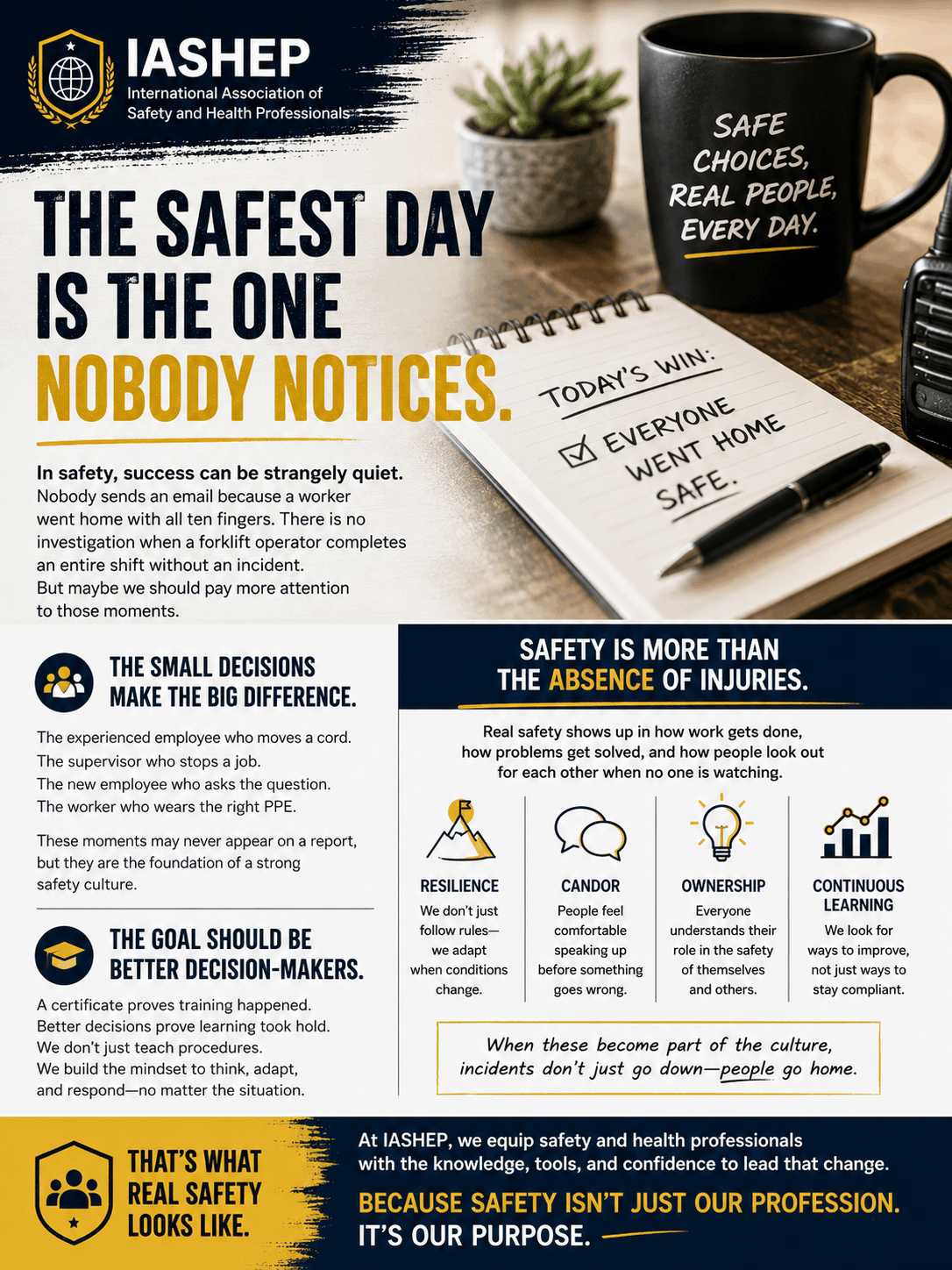
In safety, success can be strangely quiet.
Nobody sends an email because a worker went home with all ten fingers. There is no investigation when a forklift operator completes an entire shift without an incident. We rarely hold a meeting to discuss the employee who recognized a hazard, corrected it, and simply went back to work.
But maybe we should pay more attention to those moments.
Safety professionals spend a great deal of time studying what went wrong. We investigate incidents, analyze injuries, review near misses, track trends, and develop corrective actions. That work is necessary. There are lessons in failure that should never be ignored.
But there are also lessons in what goes right.
Think about the experienced employee who moves a cord before someone trips over it.
The supervisor who stops a job because something just doesn't look right.
The new employee who feels comfortable enough to ask,
"Is this really the safest way to do this?"
The worker who puts on the right PPE when nobody is watching.
Those actions will probably never appear on an injury report.
They won't become statistics.
Most will never make it into a safety meeting.
Yet those small decisions may be some of the strongest indicators of a healthy safety culture.
The Work That Never Makes the Headlines
Every day, millions of workers perform their jobs safely without anyone noticing.
A machine is inspected before it is started.
A damaged extension cord is removed from service.
A forklift operator slows down at a blind intersection.
An employee pauses before entering a confined space because something doesn't seem right.
A supervisor decides to delay a task until conditions improve.
None of these decisions generate headlines.
No one celebrates them during the afternoon production meeting.
Yet each one represents a potential incident that never happened.
The absence of an accident is often the result of dozens—or even hundreds—of small decisions made throughout the day.
While organizations naturally investigate failures, they should also pay attention to successful behaviors. Understanding why employees consistently make good safety decisions can be just as valuable as understanding why incidents occur.
Looking Beyond Injury Statistics
One of the biggest challenges in occupational safety is that success can be difficult to measure.
Organizations often rely on metrics such as:
These measurements provide valuable information, but they tell only part of the story.
They are examples of lagging indicators—they measure events that have already occurred.
By the time an injury appears in a report, the opportunity to prevent it has already passed.
Leading indicators tell a different story.
They focus on activities that help prevent incidents before they happen.
Examples include:
These activities may never appear in injury statistics, but they often reveal the true strength of an organization's safety culture.
Safety Is More Than the Absence of Injuries
A workplace can go months without a recordable injury and still have serious hazards hiding beneath the surface.
That is why safety cannot simply be measured by what didn't happen.
Real safety also shows up in how work gets done when conditions change, how people respond when the plan no longer fits, and whether the workforce has the confidence to solve problems without waiting for an incident to force the conversation.
It shows up in resilience—the ability to adapt without abandoning safe principles.
It shows up in candor—people being willing to speak openly when something does not make sense.
It shows up in ownership—employees understanding that safety is not something the safety department does for them; it is something everyone contributes to.
It shows up in continuous learning—not simply asking whether we complied, but whether there is a smarter, safer way to perform the work tomorrow.
Those qualities tell us something an injury rate alone cannot.
They tell us whether safety has become part of the way people think.
The Small Decisions That Prevent Big Incidents
Many workplace incidents are prevented long before anyone realizes they could have happened.
Consider a few examples.
An employee notices a loose handrail and reports it before someone falls.
A maintenance technician identifies unusual equipment vibration before a machine fails.
A warehouse worker chooses to walk around a spill rather than rushing through it.
A crane operator stops a lift because weather conditions begin changing.
An electrician refuses to begin work until hazardous energy has been properly isolated.
Each of these decisions may take only a few seconds.
Yet each one has the potential to prevent an injury, equipment damage, production delays, or worse.
Safe workplaces are built one decision at a time.
Why Speaking Up Matters
One of the strongest indicators of a healthy safety culture is whether employees feel comfortable raising concerns.
In many incidents, someone noticed something unusual before the event occurred.
Sometimes they were uncertain.
Sometimes they assumed someone else would address it.
Sometimes they remained silent because they feared criticism or believed production mattered more than safety.
Organizations should create environments where questions are welcomed rather than discouraged.
Questions such as:
These conversations often prevent incidents that never become part of an investigation.
Employees should never feel that speaking up is a sign of weakness.
It is often one of the strongest demonstrations of professional responsibility.
Leadership Sets the Standard
Safety culture does not begin with written policies.
It begins with leadership behavior.
Employees observe what supervisors do every day.
If leadership consistently follows procedures, wears required PPE, addresses hazards promptly, and encourages open communication, employees are far more likely to do the same.
Conversely, when shortcuts become acceptable for managers, they often become acceptable for everyone else.
Leadership influences safety culture not only through formal training but also through everyday actions.
The safest organizations are those where leaders consistently demonstrate that safety is part of every decision—not just something discussed after an incident.

Comments (0)
No comments yet. Be the first to comment!
Leave a Comment