
The Safest Day Is the One Nobody Notices
Aug 29, 2026
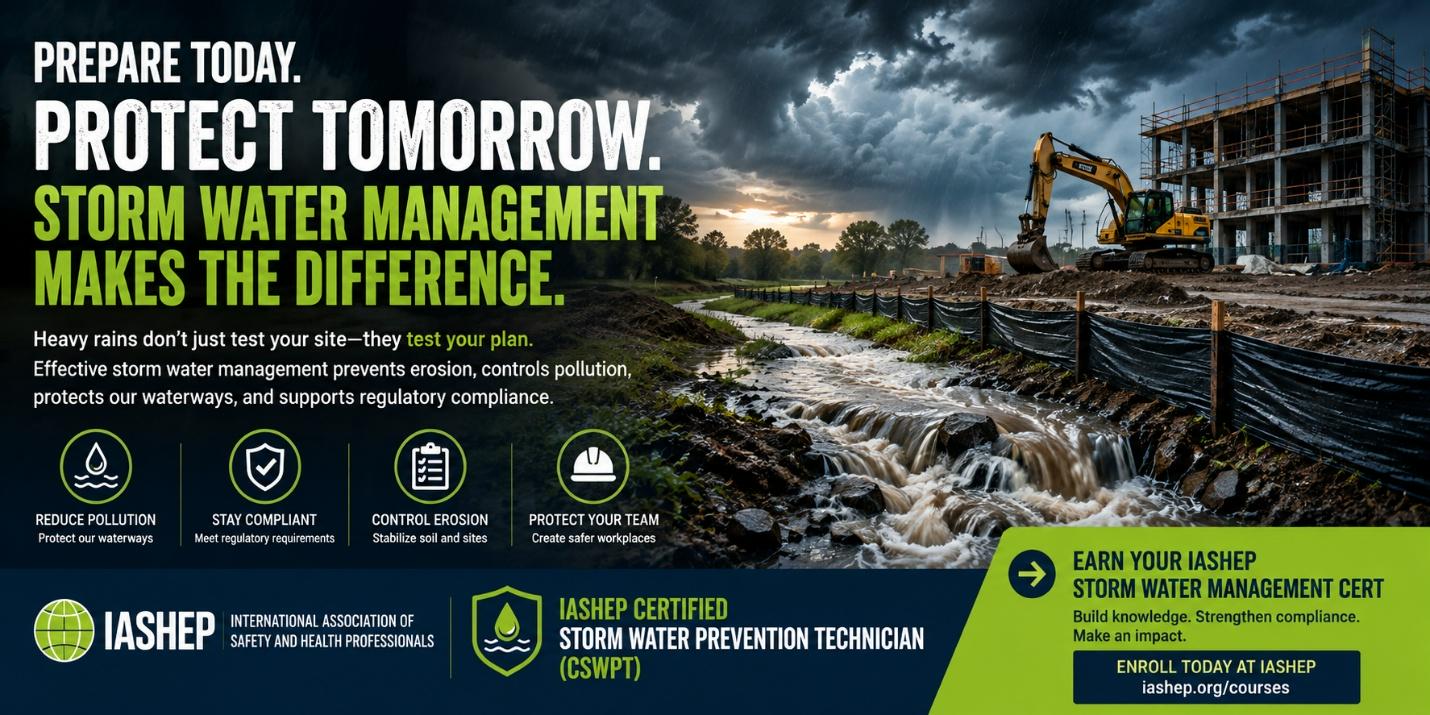
Stormwater management has become an increasingly important responsibility for organizations working in construction, industrial operations, transportation, municipal infrastructure, and other industries where rainfall can carry pollutants into surrounding waterways.
Every significant rainfall event has the potential to move sediment, chemicals, fuels, debris, oil, concrete-related materials, and other pollutants from a worksite into storm drains, streams, rivers, lakes, wetlands, and other receiving waters. Once these pollutants leave a site, they can affect water quality, aquatic ecosystems, surrounding communities, and the organization's regulatory responsibilities.
For professionals responsible for environmental compliance and workplace operations, effective stormwater management is therefore much more than an environmental concern. It is an important part of responsible project management, pollution prevention, regulatory compliance, and environmental stewardship.
As the United States moves through the wetter months and hurricane season, organizations should be prepared for changing weather conditions and the increased runoff that heavy rainfall can create. NOAA's 2026 Atlantic hurricane season outlook identifies August through October as the peak period for seasonal activity, making this an especially appropriate time for organizations to review their stormwater preparedness and pollution prevention practices.
Why Stormwater Management Matters
Stormwater runoff occurs when rain or snowmelt flows over land and impervious surfaces instead of soaking into the ground. As runoff moves across developed areas and worksites, it can pick up pollutants and transport them into nearby waterways.
The U.S. Environmental Protection Agency (EPA) identifies pollutants associated with stormwater runoff that can include sediment, debris, chemicals, oil and grease, construction materials, concrete washout, nutrients, and other contaminants.
Construction sites can be particularly vulnerable because activities such as clearing, grading, excavation, and other earth-disturbing operations can expose soil and increase the potential for sediment to be transported by rainfall.
Uncontrolled sediment and polluted runoff can contribute to:
Effective stormwater management helps prevent these impacts before they occur.
Stormwater Compliance Goes Beyond Installing BMPs
Stormwater compliance is not simply a matter of placing a few erosion-control devices around a construction site and assuming the problem has been solved.
Effective stormwater management requires a comprehensive approach that considers site conditions, weather, drainage patterns, construction activities, materials, erosion risks, and the condition of existing controls.
Organizations may need to address areas such as:
EPA's stormwater guidance emphasizes that effective controls need to be properly selected, installed, maintained, and monitored. EPA also provides BMP guidance covering areas such as silt fences, sediment basins, storm drain inlet protection, construction entrances, spill prevention, concrete washout, and other pollution prevention practices.
A control that was effective when installed may become damaged, overwhelmed, displaced, or inadequate as site conditions change.
That is why stormwater management must be treated as an ongoing process rather than a one-time installation.
Why Heavy Rainfall Requires Additional Preparation
Heavy rainfall can quickly expose weaknesses in a stormwater management program.
A site that appears adequately controlled during dry weather may experience significant runoff when intense rainfall occurs. Soil can become saturated, drainage patterns can change, erosion controls can fail, and materials stored outdoors can become sources of pollution.
Organizations should therefore consider storm preparedness as part of their overall stormwater program.
Before significant rainfall, responsible personnel should evaluate:
EPA's BMP guidance notes that erosion and sediment controls require regular inspection and maintenance, including attention around rainfall events.
Preparation before a major rainfall event can be far more effective than trying to correct environmental problems after pollutants have already left the site.
Understanding NPDES and Stormwater Requirements
For professionals working with construction and environmental compliance, understanding the regulatory framework surrounding stormwater is an important part of professional competency.
The National Pollutant Discharge Elimination System (NPDES) stormwater program regulates certain stormwater discharges from construction activities, industrial activities, and municipal separate storm sewer systems (MS4s).
For construction activities, EPA states that a Clean Water Act permit is generally required for stormwater discharges from construction activity disturbing one acre or more of land, as well as certain smaller projects that are part of a larger common plan of development or sale that will ultimately disturb one acre or more. State-specific requirements may also apply.
This is why professionals involved in stormwater management should understand not only the physical controls used at a site but also the compliance responsibilities associated with those controls.
Depending on the project and applicable permit, stormwater programs can involve:
Requirements can vary depending on the location, type of activity, permit, and regulatory authority, so professionals should always evaluate the requirements applicable to their specific project.
The Growing Need for Qualified Professionals
Organizations today are placing greater emphasis on environmental stewardship, regulatory compliance, and responsible management of natural resources.
As a result, employers increasingly value professionals who understand stormwater management principles and can contribute to maintaining compliant worksites while protecting surrounding communities and natural resources.
Stormwater responsibilities can involve many different roles, including:
Why Professional Stormwater Training Makes a Difference
Stormwater management should not be something professionals learn only after a problem occurs.
Proper training provides individuals with the knowledge needed to recognize potential issues before they become violations or environmental incidents.
A well-designed stormwater management training program can help professionals better understand:
Training also helps professionals understand why stormwater controls are necessary rather than simply teaching them where to place a particular BMP.
When personnel understand the purpose behind a control, they are better positioned to recognize when that control is no longer performing as intended.
From Compliance to Competency
Completing a training course is valuable, but the ultimate goal should be competency.
A qualified professional should be able to look at a worksite and ask practical questions:
Where is stormwater flowing?
What pollutants could runoff encounter?
Are erosion and sediment controls functioning properly?
Could heavy rainfall overwhelm the current controls?
Are materials properly stored and protected?
Have previously identified deficiencies been corrected?
Is additional maintenance necessary?
These questions encourage professionals to think proactively.
Stormwater management is most effective when employees and supervisors can identify potential problems before rainfall turns them into environmental incidents.
EPA's construction inspection training similarly emphasizes knowledge of erosion and sediment controls, pollution prevention practices, inspections, and required documentation as important elements of qualified inspection work.
The Importance of Inspections and Documentation
Stormwater controls can deteriorate over time.
Silt fences can become damaged. Sediment basins can fill. Inlet protection can become blocked. Drainage channels can become obstructed. Construction traffic can disturb previously installed controls.
Regular inspections help identify these problems before they become larger issues.
Documentation is equally important because it creates a record of what was observed, what corrective actions were required, and whether those actions were completed.
An effective inspection process should help answer:
Best Management Practices Need Ongoing Maintenance
Best Management Practices, commonly referred to as BMPs, are an important component of stormwater pollution prevention.
BMPs can include structural and non-structural practices designed to prevent or reduce pollutants from entering stormwater runoff.
Examples may include:
However, installing a BMP does not guarantee that it will remain effective.
BMPs require appropriate selection, installation, inspection, and maintenance. EPA's national BMP resources emphasize using stormwater practices as part of a broader system rather than viewing each individual practice in isolation.
This reinforces the importance of having trained personnel who understand how stormwater controls work and when they need attention.
Preparing for the Wet Season
Organizations can use the wet season as an opportunity to review their stormwater management programs before severe weather creates additional challenges.
A practical preparation process can include:
Review Existing Stormwater Controls
Inspect erosion and sediment controls, drainage pathways, inlet protection, containment areas, and other BMPs.
Identify Vulnerable Areas
Look for exposed soil, steep slopes, material storage areas, drainage channels, and locations where runoff could concentrate.
Check Materials and Chemicals
Make sure fuels, oils, chemicals, waste, and other potential pollutants are properly stored and protected from rainfall and runoff.
Review Inspection Procedures
Confirm that responsible personnel understand when inspections should occur and how deficiencies should be documented.
Verify Corrective Actions
Review previous inspection findings and make sure outstanding issues have been resolved.
Prepare for Heavy Rainfall
Consider what could happen if rainfall exceeds normal expectations and determine whether additional controls or contingency measures are necessary.
Preparation is one of the most effective ways to reduce the likelihood that a rainfall event will become an environmental compliance problem.
Earn the IASHEP Certified Storm Water Prevention Technician (CSWPT) Credential
Professional education can help individuals strengthen their understanding of stormwater prevention and environmental compliance.
The IASHEP Certified Storm Water Prevention Technician (CSWPT) credential was developed to help professionals build knowledge related to stormwater prevention and environmental responsibility.
As part of IASHEP's commitment to advancing safety, health, and environmental education, the course provides practical instruction designed for individuals responsible for managing or supporting stormwater prevention efforts.
The CSWPT credential can be particularly relevant for professionals who work in or support:
Whether you are beginning your career, expanding your professional qualifications, or preparing your organization for the challenges associated with the wet season, pursuing specialized stormwater education can demonstrate a commitment to professional development and environmental responsibility.
Key Takeaways
Effective stormwater management requires more than installing erosion-control measures. It requires knowledgeable people who understand how runoff behaves, how pollutants can move through a worksite, and how BMPs should be inspected and maintained.
The most important points to remember are:
Continuing education strengthens professional knowledge and organizational preparedness.
Frequently Asked Questions About Stormwater Management Training
What is stormwater management?
Stormwater management involves controlling and reducing the pollutants and runoff associated with rainfall and snowmelt. It can include erosion and sediment controls, pollution prevention practices, BMPs, inspections, maintenance, and other measures designed to protect water quality.
Why is stormwater management important on construction sites?
Construction activities can disturb soil and expose materials that rainfall can carry into nearby waterways. Effective stormwater controls help reduce sediment and other pollutants entering storm drains, streams, rivers, lakes, and other receiving waters.
What are Best Management Practices (BMPs) for stormwater?
BMPs are practices used to prevent or reduce stormwater pollution. Examples include silt fences, sediment basins, storm drain inlet protection, construction entrances, erosion controls, spill prevention, concrete washout controls, and proper material management.
What is an NPDES stormwater permit?
NPDES is the National Pollutant Discharge Elimination System. Under the Clean Water Act, certain stormwater discharges—including some construction, industrial, and municipal discharges—may require permit coverage. Specific requirements depend on the activity, location, applicable permit, and regulatory authority.
Who can benefit from stormwater management training?
Safety professionals, environmental specialists, project managers, superintendents, inspectors, field supervisors, contractors, and other personnel involved in construction or environmental compliance can benefit from stormwater management education.
Why are stormwater inspections important?
Inspections help identify damaged, inadequate, or poorly maintained stormwater controls. Regular inspection and maintenance can help ensure that erosion and sediment controls continue to perform effectively as site conditions change.
What is the IASHEP CSWPT credential?
The IASHEP Certified Storm Water Prevention Technician (CSWPT) credential is a professional education and credentialing opportunity offered by IASHEP for individuals seeking to strengthen their knowledge of stormwater prevention and environmental compliance.
Protecting Water Resources Starts With Knowledge
Stormwater management is a responsibility that extends beyond a single department or individual. Every person involved in a project can play a role in preventing pollutants from reaching nearby waterways.
As weather patterns, construction activities, regulations, and environmental expectations continue to evolve, organizations need professionals who are prepared to recognize risks and take appropriate action.
Training provides the foundation for that preparedness.
At IASHEP, we believe that professional development should provide practical knowledge that professionals can apply in the real world. By strengthening stormwater management skills, safety professionals and environmental personnel can contribute to stronger compliance programs, better environmental stewardship, and safer, more responsible worksites.
Stormwater management is not just about meeting regulations—it is about protecting communities, preserving natural resources, and ensuring that every rainfall event is managed responsibly.
Ready to advance your expertise?
Explore the IASHEP Certified Storm Water Prevention Technician (CSWPT) course and enroll through IASHEP's official course catalog. Build practical knowledge that can help you support stormwater pollution prevention, environmental compliance, and responsible site management.
Visit IASHEP to learn more about the CSWPT course, professional certifications, and continuing education opportunities.


Comments (0)
No comments yet. Be the first to comment!
Leave a Comment